





Value added in construction projects
Value relates to the assessment of the benefits brought by something in relation to the resources needed to achieve it. In the context of construction projects it is normally expressed as a ratio between a function and the whole life cost for that function.
Value = Function / Whole Life Cost
or
Value = What you get (or want) / What you pay
See Value in building design and construction for more information.
The term ‘value added’ refers to the increase in value created by goods or services.
The term 'gross value added' (GVA) offers a measure of the actual value added by a commodity, excluding the costs of production. This is often used to express the contribution of a good, service, sector or region to the wider economy. For example, in 2014, the construction industry GVA was £113 billion. Ref House of Commons Briefing paper Number 01432, 6 October 2015 Construction industry: statistics and policy.
See Gross value added for more information.
The term ‘value added’ is also used to express the differentiation of a commodity compared to its competitors by the additional features it offers that cannot be measured by its price.
Focussing exclusively on price can be at the expense of value added features, or 'value for money'. Value added features can increase the worth or benefit of a product or service. However, value added features are often subjective, meaning they are dependent on the perception of the additional worth or benefit.
Manufacturers of construction products for example, will often be competing with a large number of similar products available on the market. It can be beneficial therefore to develop added value 'brand values' that make a particular product more desirable.
Value added can be created by identifying and understand the needs and desires of the market, rather than focusing exclusively on price. Some techniques for creating a value added approach include:
- Providing technical support to customers.
- Providing maintenance service such as inspections over a period of time.
- Being active on the social media platforms most relevant to the target audience, providing answers to queries, promoting discussions, updating customers, demonstrating brand values, and so on.
- Providing specific blog content that can help to establish an authoritative ‘voice' in the relevant field.
- Preparing email newsletters that include helpful and informative guides and news items.
- Offering specification tools and apps for the client or end-user. These might include online calculation tools, product selectors and comparisons, e-learning and CPD, media libraries, colour and texture selectors, and so on.
- Offering pre-construction and project management services such as; obtaining project approvals, preparing project budgets, sourcing investors, and so on.
- Offering audits and undertaking repairs.
NB, STAR Procurement (a shared procurement service for Rochdale, Stockport, Tameside and Trafford Councils), Glossary of Terms, published in May 2019, suggests that added value is: 'An improvement or addition that goes beyond the specification in the tender/contract documents.'
[edit] Related articles on Designing Buildings Wiki
- Best value.
- Gross value added.
- Key performance indicators.
- Market value.
- Quality in construction projects.
- Total quality management in construction.
- Value in building design and construction.
- Value management.
[edit] External resources
- ForConstructionPros - How value added services can improve your construction business bottom line
Featured articles
Check out some of the best features and news from Designing Buildings as well as key stories from around the web.

Building Safety Newsletter from MHCLG.
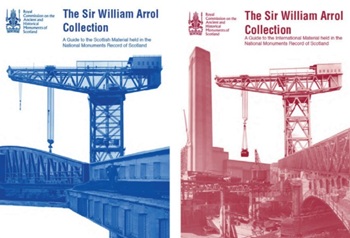
An extraordinary record of steel engineering worldwide.

Households living near new pylons to save on bills.

ECA warns growth must not outpace grid capacity or skills.
The role of the client and decision making

CIOB response to built environment professions call for evidence.
Construction's sustainability reporting revolution

Tracking upfront embodied carbon with digital tools.
ECA welcomes procurement reforms

Public spending must back British jobs and skills.
Campaigning for Edinburgh: the Cockburn Association 1875-2049
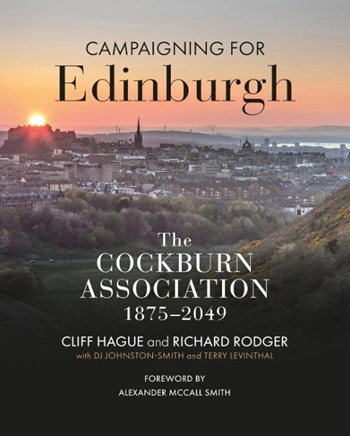
The role of the civic voice in protecting character. Book review.

CIOB photography competition is open for entries.
ECA Edmundson apprentice of the year award
Finalists announced.
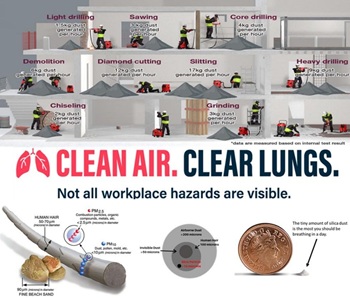
Major new study exposes serious knowledge gaps.

Generating energy from internal light as well as sunshine.